Copyright © 2025 Чуангмин Муфта (Цзянсу) Co., Ltd.
Мембранные соединения: "код соответствия" мембранных групп
2025-12-19
In the "connection family" of industrial transmission, membrane couplings are the "precision players" that achieve torque transmission through the elastic deformation of metal membranes. The form of the membrane group is the core factor determining its suitability for various working conditions - different structures of membrane groups have significant differences in their ability to compensate for deviations and carry torque.
The most basic single membrane group is usually composed of several thin metal membranes stacked together. It has a compact structure, is lightweight, and can slightly compensate for angular and axial deviations. It is suitable for light-duty conditions with low speeds and small loads, such as small fans and micro-conveyors. However, its weakness is also obvious: it has weak radial compensation ability. If the equipment vibrates too much during operation, the membranes may develop fatigue cracks due to repeated deformation, significantly reducing their lifespan.
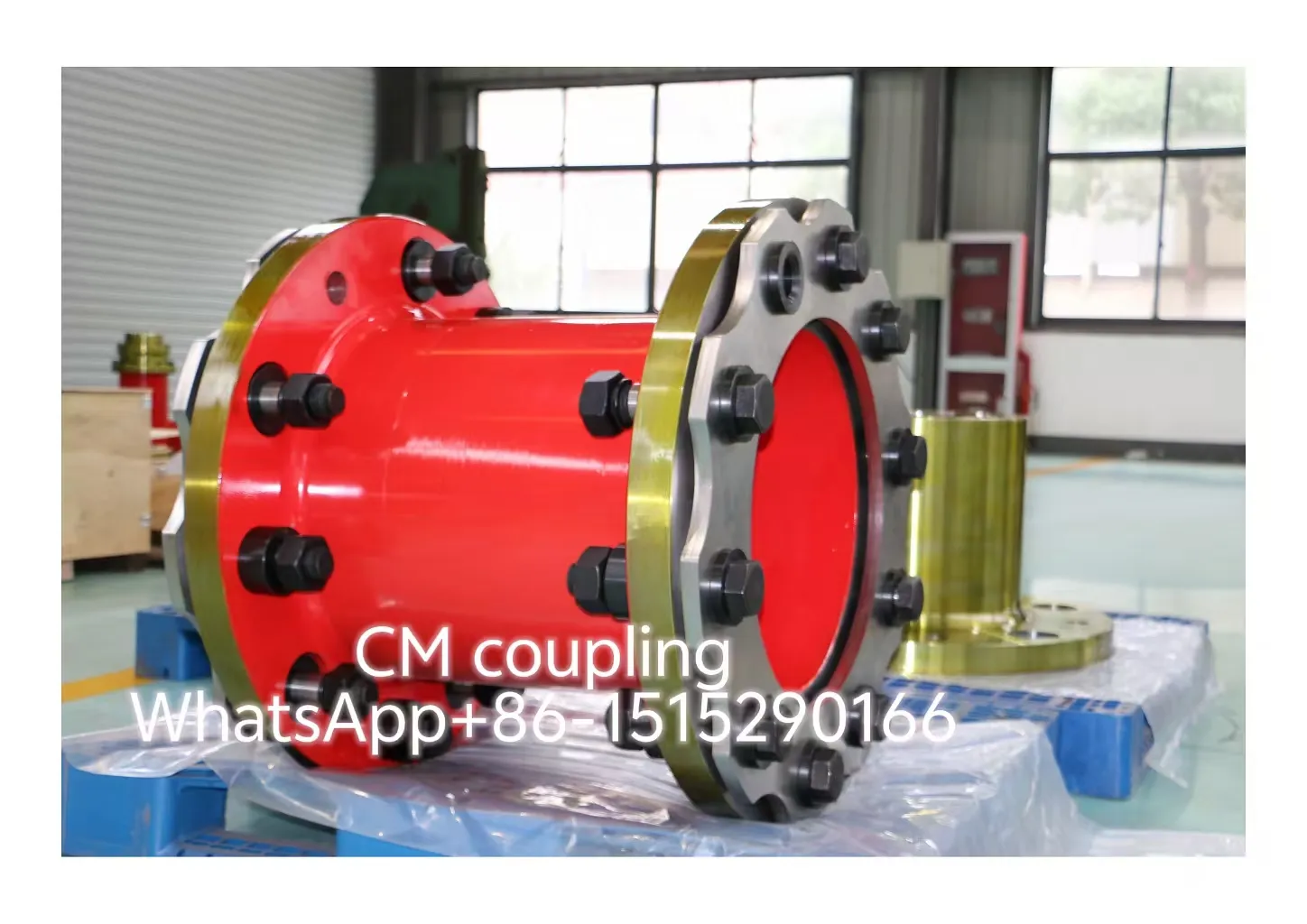
The double membrane group is the "mainstream choice" in industrial applications. With an interval sleeve installed between the two groups of membranes, it enhances the compensation capacity: it can handle moderate radial and angular deviations and buffer certain impact loads. It can be found in various equipment such as machine tool spindles, chemical pumps, and packaging machinery. However, it is slightly larger in size than the single group and requires strict control of alignment errors during installation to avoid additional stress on the membranes.
The multi-membrane group is the "exclusive choice for heavy-duty conditions". With three or more membrane groups and long interval sleeves, it achieves a higher level of compensation range and torque carrying capacity, making it suitable for equipment with large deviations and high torque, such as metallurgical rolling mills and large compressors. However, its cost is relatively high, and during daily maintenance, it is necessary to focus on checking the deformation synchronization of each group of membranes to prevent excessive stress on a single group.
The key to selecting a membrane group is actually "matching according to needs": choose a single group for light loads and small deviations, a double group for general conditions, and a multi-group for heavy loads and large deviations. These thin membrane groups, though seemingly insignificant, are the key to the "precise operation" of couplings.
In the "connection family" of industrial transmission, membrane couplings are the "precision players" that achieve torque transmission through the elastic deformation of metal membranes. The form of the membrane group is the core factor determining its suitability for various working conditions - different structures of membrane groups have significant differences in their ability to compensate for deviations and carry torque.
The most basic single membrane group is usually composed of several thin metal membranes stacked together. It has a compact structure, is lightweight, and can slightly compensate for angular and axial deviations. It is suitable for light-duty conditions with low speeds and small loads, such as small fans and micro-conveyors. However, its weakness is also obvious: it has weak radial compensation ability. If the equipment vibrates too much during operation, the membranes may develop fatigue cracks due to repeated deformation, significantly reducing their lifespan.
The double membrane group is the "mainstream choice" in industrial applications. With an interval sleeve installed between the two groups of membranes, it enhances the compensation capacity: it can handle moderate radial and angular deviations and buffer certain impact loads. It can be found in various equipment such as machine tool spindles, chemical pumps, and packaging machinery. However, it is slightly larger in size than the single group and requires strict control of alignment errors during installation to avoid additional stress on the membranes.
The multi-membrane group is the "exclusive choice for heavy-duty conditions". With three or more membrane groups and long interval sleeves, it achieves a higher level of compensation range and torque carrying capacity, making it suitable for equipment with large deviations and high torque, such as metallurgical rolling mills and large compressors. However, its cost is relatively high, and during daily maintenance, it is necessary to focus on checking the deformation synchronization of each group of membranes to prevent excessive stress on a single group.
The key to selecting a membrane group is actually "matching according to needs": choose a single group for light loads and small deviations, a double group for general conditions, and a multi-group for heavy loads and large deviations. These thin membrane groups, though seemingly insignificant, are the key to the "precise operation" of couplings.
Предыдущий:Поставка больших универсальных муфт